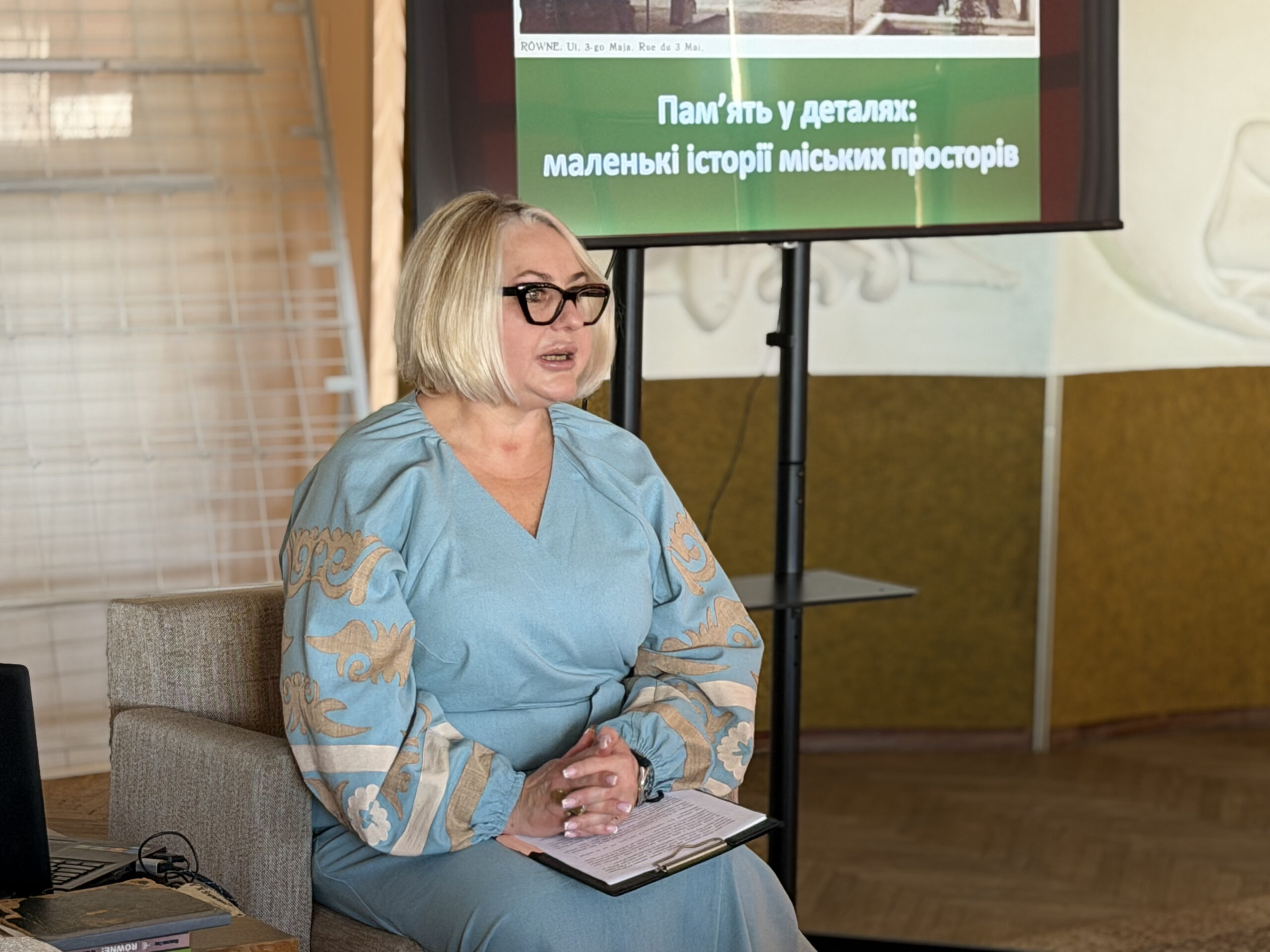
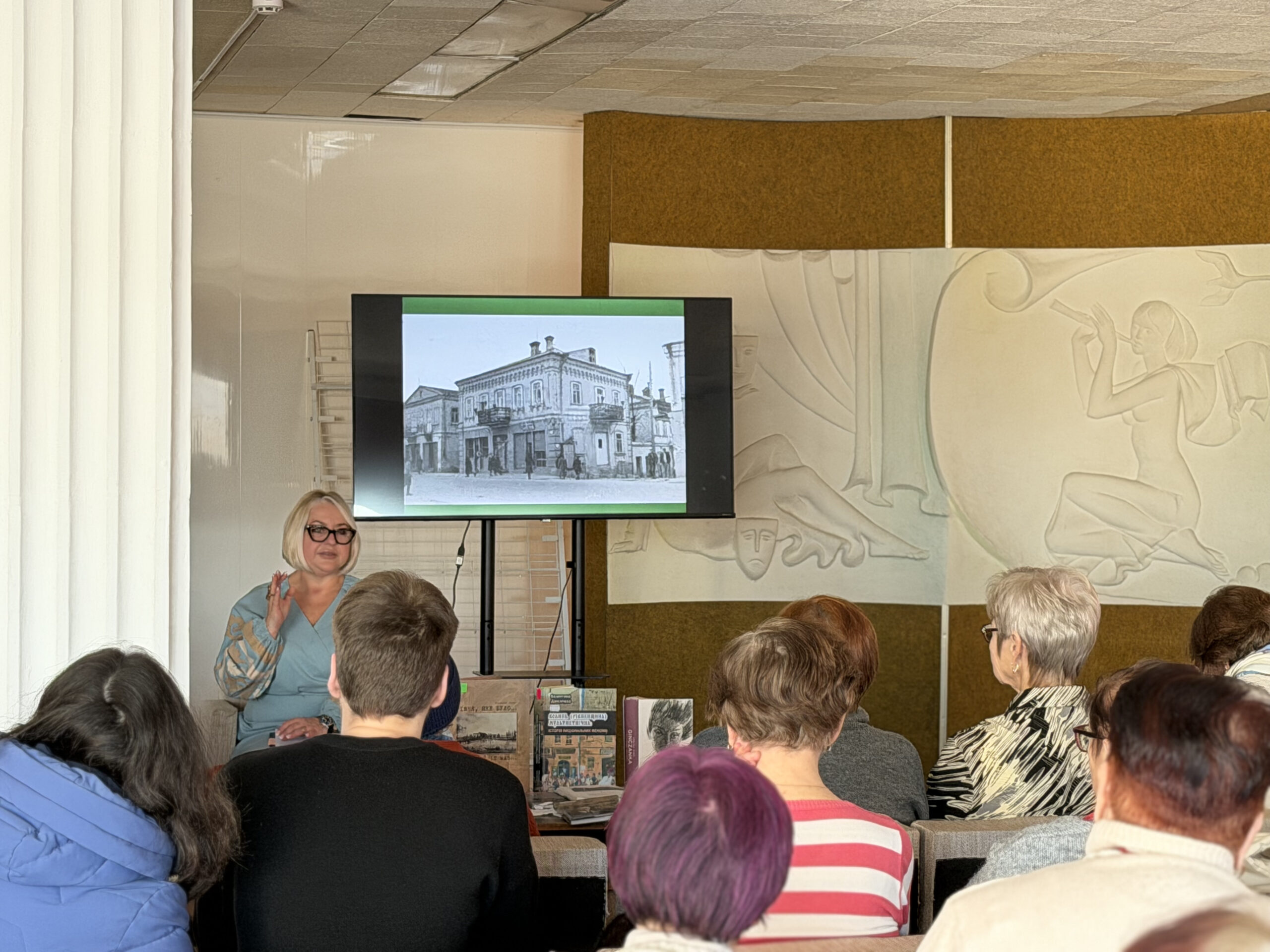
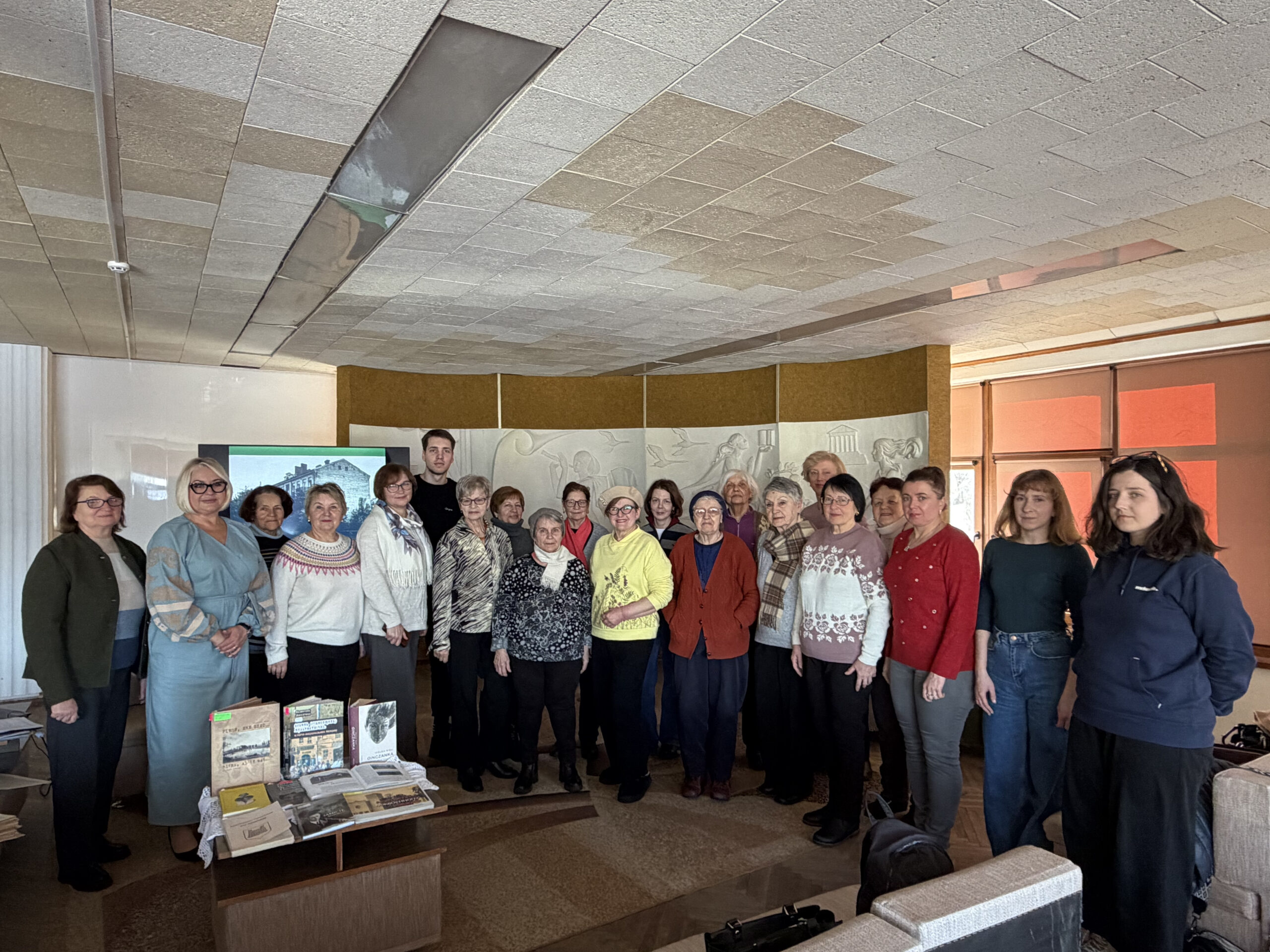
On February 21, a lecture “Memory in Details: Small Histories of Urban Spaces” by local historian Olena Huminska was held, which was dedicated to the history of interwar Rivne.
The meeting was based on the publications of Polish journalist Oleksandr Piskor, who in the 1930s wrote reports about Rivne for the Warsaw newspaper “Prosto z mostu”. His texts offer a careful examination of the rhythm of the border town at that time, social contrasts, the atmosphere of the streets, and the everyday life of Rivne residents. The translations and research additions of Olena Huminska opened these materials in a new way, combining journalistic observations with archival materials and modern local history research.
During the event, we tried to create a complex and holistic picture of life at that time, turning to interesting facts from Piskor’s texts:
- The journalist called Rivne “the city of four hundred presidents” because of the large number of small organizations and societies that were active in the city at that time and had their own heads – “presidents”;
- The author considered the residents of the “Kavkaz” district to be a generation of poor people, describing this part of the city as a neglected suburb, but today this area is perceived as almost the central part of Rivne, which, in turn, demonstrates the development and radical changes of the city;
- For some time, the city had an official document in effect, according to which residents of houses on the central street were given free flowers with a request to display them on their windowsills and thus decorate the city’s main street. Unfortunately, despite good intentions, this initiative did not have the expected success.
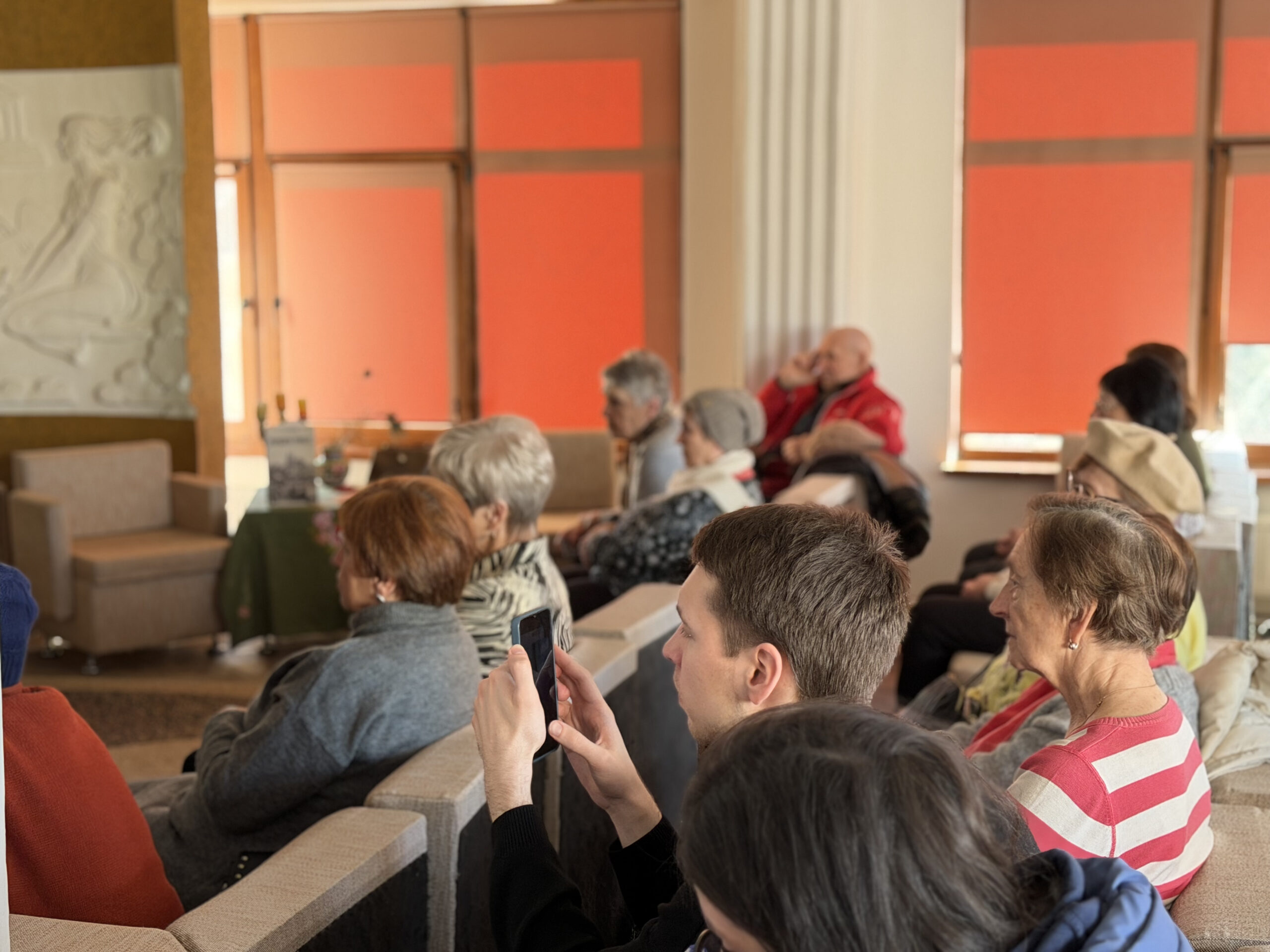
Particularly valuable were the contributions from the event’s guests, who shared their own family stories about the city’s past. These personal memories added vivid details, emotions, and generational memories to the archival materials.
“REHERIT 2.0: Common Responsibility for Shared Heritage” is implemented by the Center for Urban History and the Centre for Regional Development of the PPV Economic Development Agency with the financial support of the European Union.
This publication was produced with the financial assistance of the European Union. Its content is the sole responsibility of the partners of the REHERIT 2.0 project and does not necessarily reflect the views of the European Union.