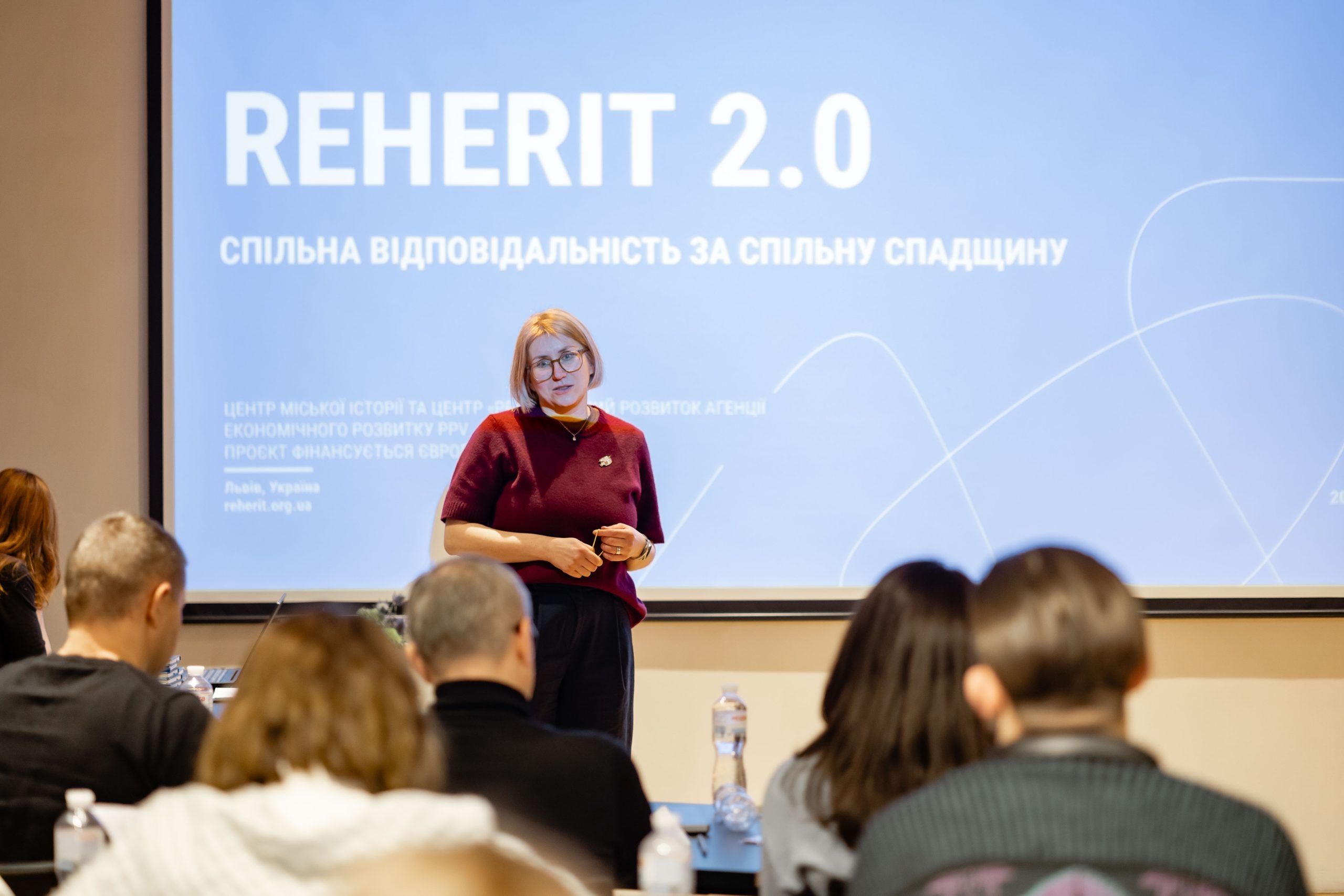
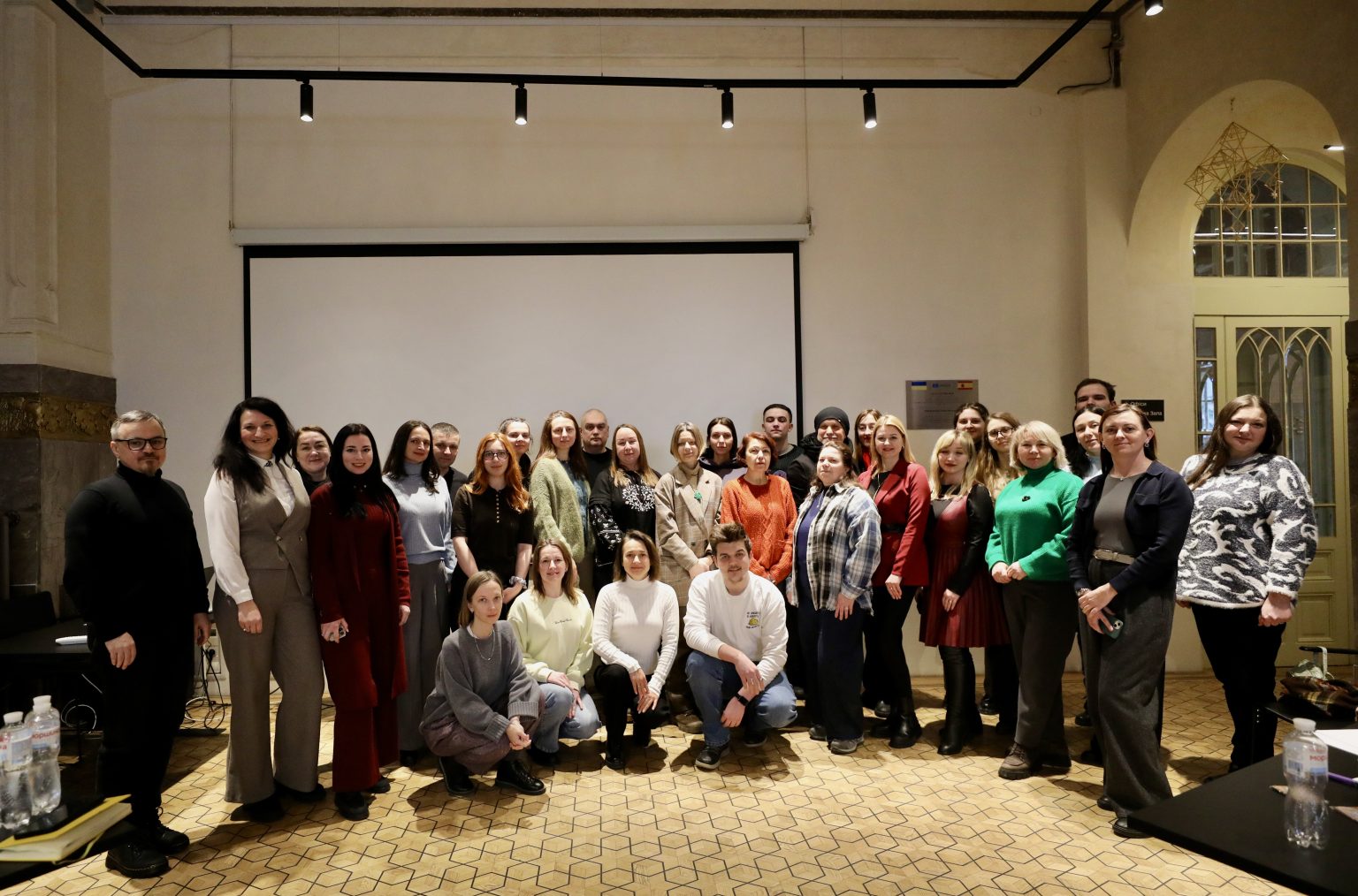
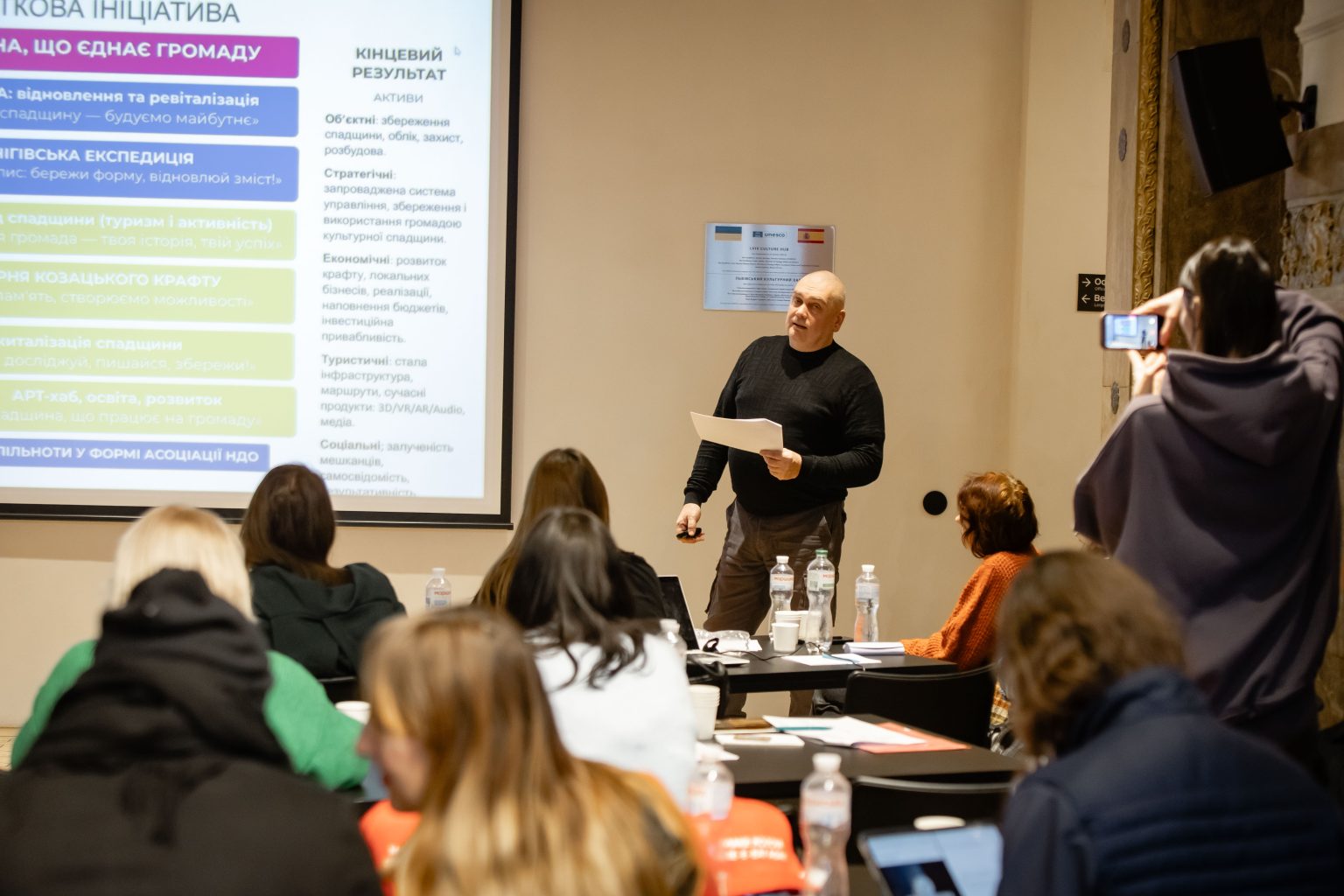
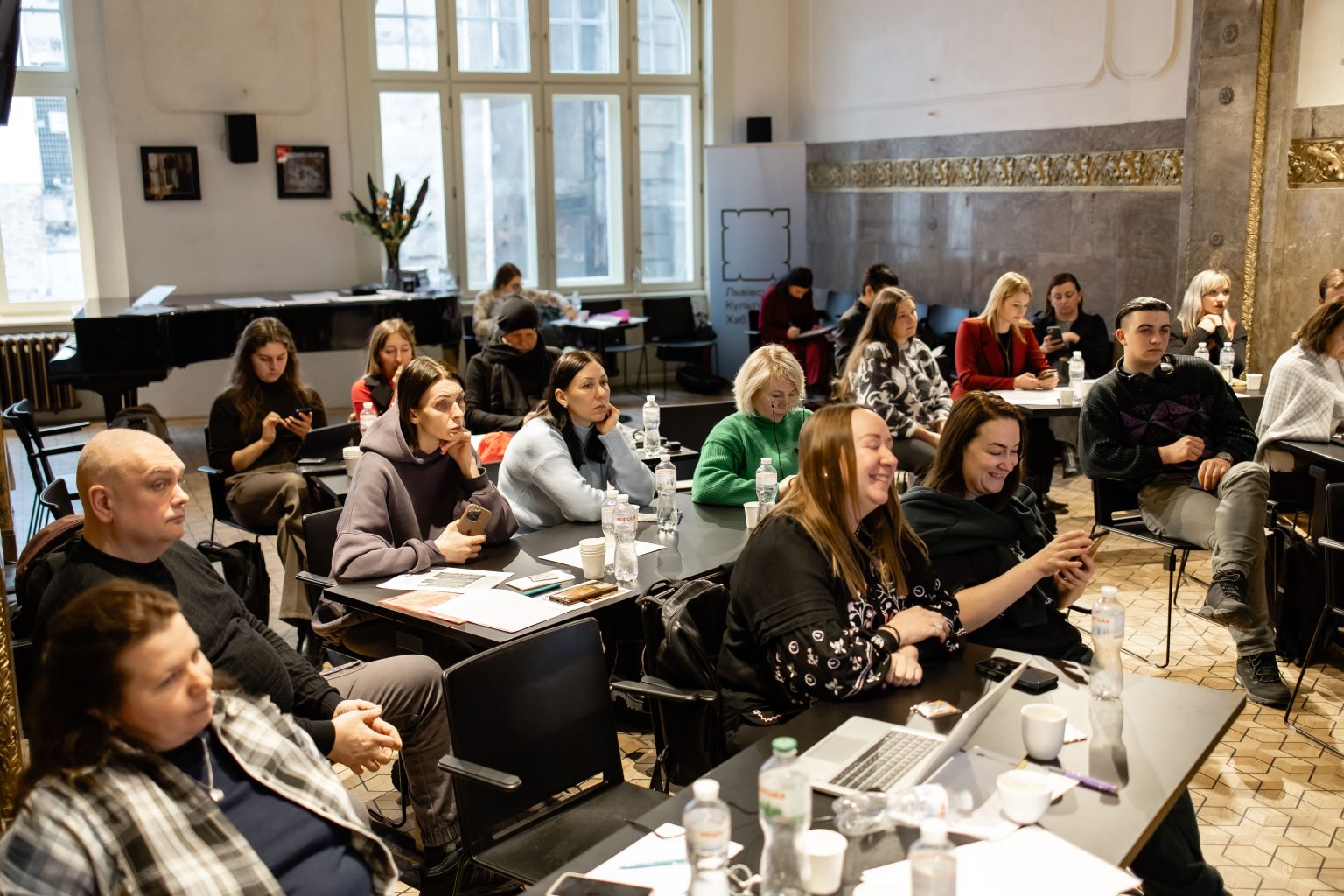
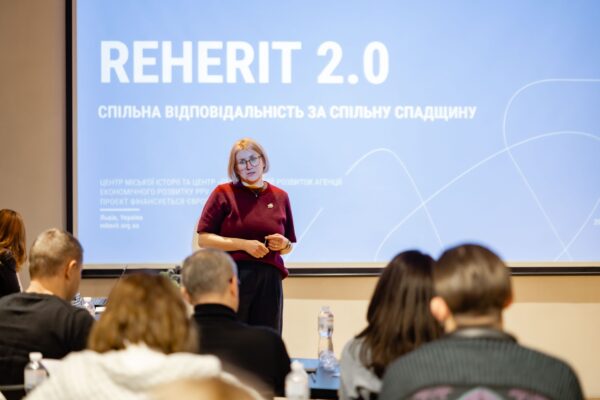
On January 29 and 30, participants of the training program “Heritage: Projects that Change Communities” presented their ideas for development initiatives at the Lviv Cultural Hub, and our experts provided comments and recommendations for further work. These were ideas for educational platforms, mine renovations, development of heritage offices, creative residencies, etc. Among the locations of the participants were architectural objects, archaeological sites, industrial heritage, museums, reserves, castles, and monasteries.
In the REHERIT 2.0 project, we are working to strengthen the role of heritage as a common asset for local economic development of communities. Thus, the training program launched a series of project activities to develop the competencies of specialists in heritage and cultural management. In particular, how to create development initiatives that encompass/combine several projects and systematically affect community life, working with heritage as a resource.
The training program was organized jointly by the teams of the PPV Economic Development Agency and the Center for Urban History and brought together 50 participants from 14 regions of Ukraine offline in Lviv.
Key insights from the trainings
- Why a development initiative, and not just individual projects? Such an approach involves combining several projects with a common goal to provide a significant economic resource for the region’s development. For example, it could be a self-sustaining cultural center, a restored estate, or a strong local identity. Development initiatives can be object-centric, experience-centric, educational, and sense-making.
- Why heritage? In the context of regional sustainable development, cultural and natural heritage are considered key components of territorial capital, which form the unique competitive advantages of a particular territory. Cultural heritage is a kind of territorial marker that distinguishes it from similar regions and enhances its attractiveness and status at the national and international levels.
- Myths and reality: There is a widespread perception of heritage as a little-known past and history that should be told about as a way to attract tourists. However, in reality, cultural heritage is a territorial asset and a resource for its future development. It requires effective management, accessibility, and quality communication to have a positive impact on community life.
- Cultural heritage management is a proactive system that considers cultural heritage as a strategic resource for the sustainable development of society and the economy. Management integrates heritage into modern life and, therefore, can envisage a private management model, a community participation model, a public-private partnership model, a management model through investment contracts, or a public management model.
- Cultural heritage often remains invisible to the community in which it is located/localized due to the difference in the cultural capital of the community and the professional circle of historians, artists, and cultural figures. Simply put, communities are often focused on other needs, so projects must maintain the cultural heritage’s visibility. Dialogue with the community can be built through the promotion of events, tourism, or cultural products. It is also possible to communicate heritage as a process, rather than a “finished object” for broadcasting.
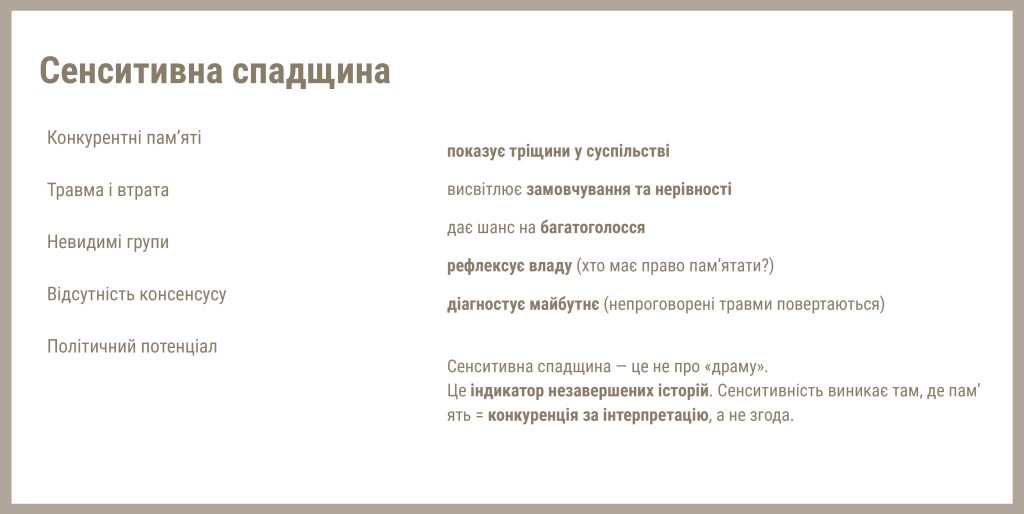
- How to work with conflict history? Wars, losses, repressions, genocide, and other traumatic events have resulted in sensitive cultural heritage. Working with such objects and history requires attention and sensitive, trauma-informed discussion that does not lead to retraumatization.
- In modern approaches, heritage is not just seen as a set of material objects, but as a process of interaction. This means that it is always about interpretation: what stories are told, what is considered worth preserving, and what is left out. So when working with heritage, it is important to ask the following questions:
- Community boundaries: who is “ours” and who is “other” in our city or society?
- Conflicts and memory: what to do with “inconvenient” legacies: traces of colonial or imperial practices?
- Social justice: whose past do we preserve, and whose stories remain invisible
Partnerships in the field of local history and culture can be of various types:
- By duration: short-term, ad hoc, to address specific problems, and long-term programs and institutional solutions.
- By topic: focused on heritage sites or intangible heritage, focused on local history and memory, and general cultural initiatives.
- By sector: state, community, business, international organizations.
- By scale and scope: local, interregional, international.
- By initiative format: event/project — one-off or serial events, development/institutional — long-term institutional solutions.
- By initiation mechanism: volunteer, institutional, hybrid.
Common mistakes in cultural heritage management:
- Discretion (one-person decisions that encourage lobbying and corruption) instead of transparency and clear criteria;
- Lack of comprehensive planning and communication gaps;
- Lack of cooperation with private capital — due to lack of motivation and various reservations, monuments are not transferred to the management of a private investor;
- Ignoring the needs of the community.
Donors and programs supporting projects in the field of cultural heritage and culture:
- Creative Europe 2026
- ZMINA:Resilience from Izolyatsia
- “Culture, Creativity and Inclusive Society” from Horizon Europe
- Cross-border projects Interreg NEXT Hungary – Slovakia – Romania – Ukraine (2021–2027) and Interreg NEXT Poland – Ukraine (2021–2027)
- Grants from the REHERIT 2.0 project (to be announced later)
- Ukrainian Fund for Cultural Heritage (launch of the competitive program in 2026)
- Private foundations: ALIPH Foundation (heritage protection in crisis regions), Mellon Foundation (humanities, museums, conservation), Getty Foundation (conservation, museums, heritage).
Trainers of the program “Heritage: Projects that Change Communities”:
- Volodymyr Vorobey — development initiatives;
- Olha Sahaydak — cultural policies and cultural heritage management;
- Oleksandra Kryven and Olha Sahaydak — partnerships in the field of cultural heritage;
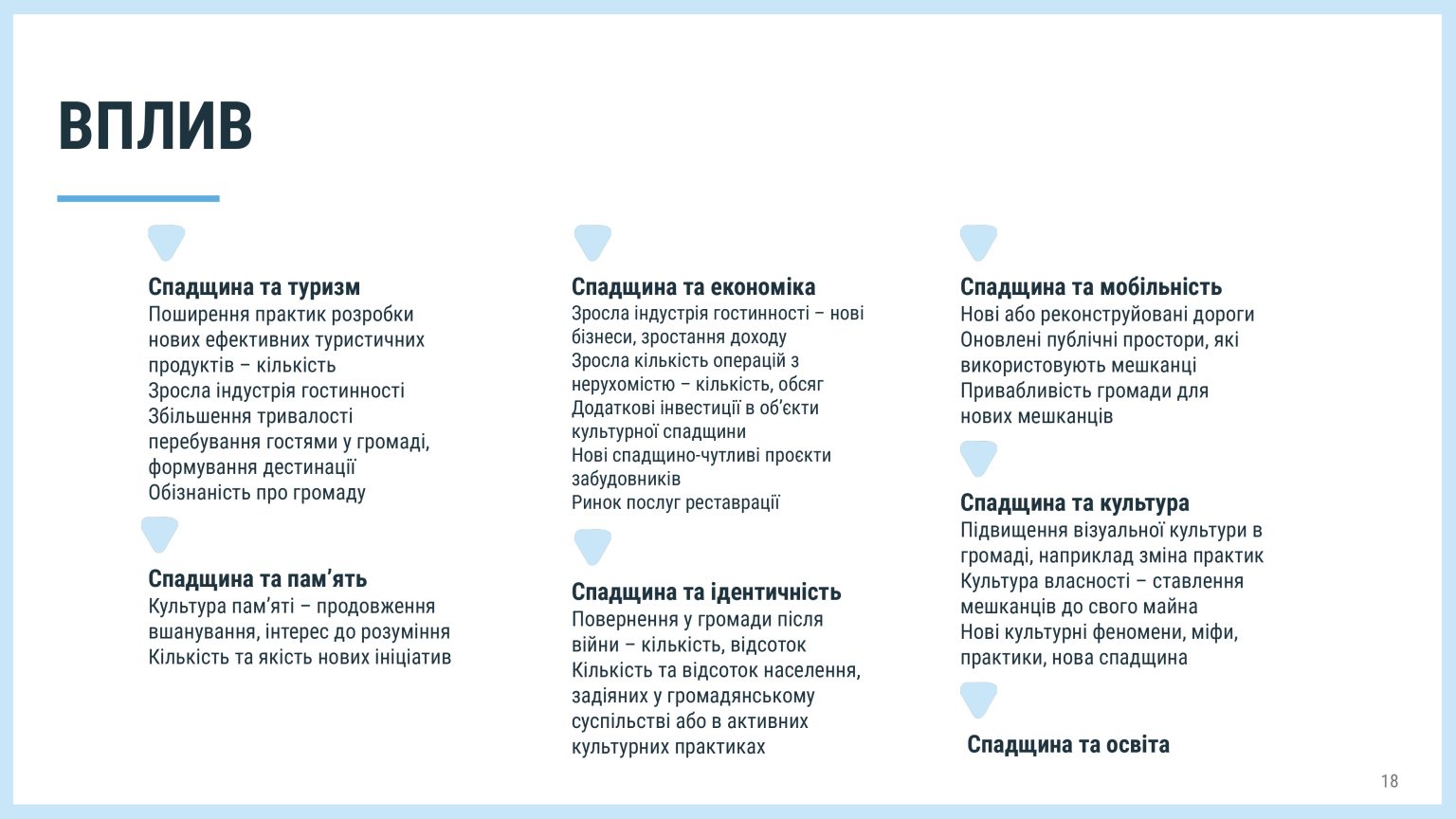
- Mariia Kravchenko — cultural heritage and economic impact;
- Ivanna Kachmarik-Yarema — financing;
- Lyudmila Hekalyuk and Natalia Tsymbal — models of cultural heritage management in communities;
- Pavlo Bohaychyk — models of cultural heritage management in communities;
- Olena Zhukova — instrumentalization of heritage;
- Hanna Havryliv — communications in the field of cultural heritage;
- Khrystya Rutar — sensitive heritage and ethics of memory.
“REHERIT 2.0: Common Responsibility for Shared Heritage” is implemented by the Center for Urban History and the Centre for Regional Development of the PPV Economic Development Agency with the financial support of the European Union.
This publication was produced with the financial assistance of the European Union. Its content is the sole responsibility of the partners of the REHERIT 2.0 project and does not necessarily reflect the views of the European Union.
Photos by Iryna Sereda